
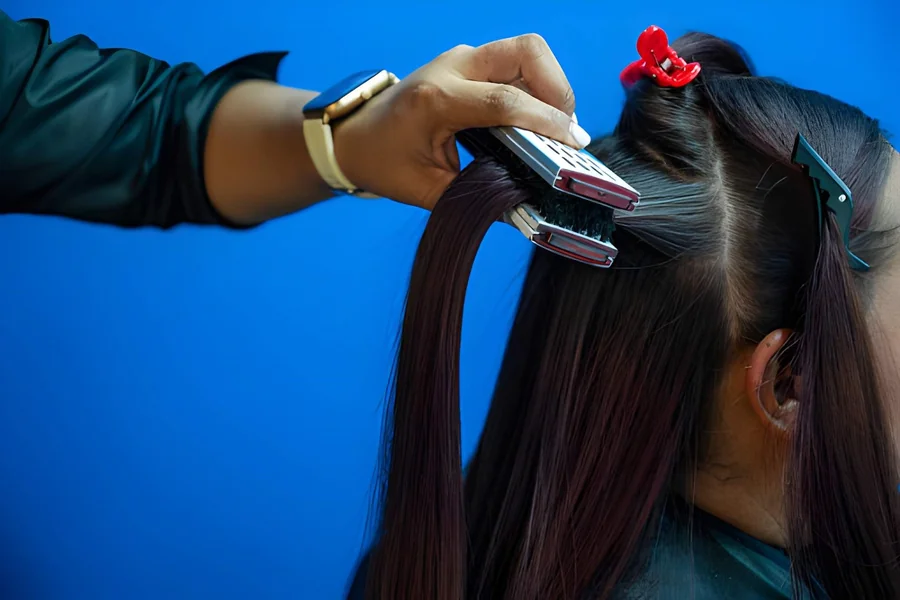
Many of us love a sleek, straight finish—but if you’re growing out relaxers, your tresses are dealing with two different textures at once: new growth that’s naturally textured and older lengths that are chemically straightened. That “line of demarcation” (where the textures meet) is fragile, and it’s exactly why so many people are leaning into hair-loss-aware routines: less heat, less tension, more scalp comfort, and better length retention. The good news is you can keep a polished, silk-press look while you transition—you just need a strategy that protects your mane from tight installs, repeated high temperatures, and stress on the edges.
Silk Press Hair: Sleek Results Without Constant Manipulation
If your roots grow textured (coily, curly, or wavy) while your ends remain straighter from past chemical services, the goal is to get a smooth finish without fighting your hair every morning. A well-planned silk press routine can be a “special occasion” style—but for everyday sleekness, many people reduce daily styling by adding extensions that match the look. When chosen wisely, Silk Press Hair Bundles can help you maintain a straight style with less combing, less pulling, and fewer touch-ups—especially when your focus is retention and scalp comfort. That said, the healthiest silk-press look isn’t just about straightening. It’s about what happens before and after heat: cleansing buildup, conditioning for elasticity, using a heat-protection strategy, and picking a finish that doesn’t require you to clamp the same section repeatedly. Think of it as “sleek styling with boundaries”—you can be smooth and shiny without being aggressive.
Here’s what helps you keep that straight look while minimizing stress on your mane:
- Use a lightweight heat protectant and avoid re-ironing the same section.
- Choose blow-drying with tension (gentle) instead of chasing perfection with multiple flat-iron passes.
- Sleep in a wrap or use a silk/satin scarf to cut down on friction.
- Keep humidity control simple (a light serum, not layers of heavy products).
Relaxed Extensions: How to Wear Straight Styles While Growing Out Relaxers
How can I wear straight styles while growing out relaxers?
Start by planning styles that don’t force you to “match” textures daily. Your new growth wants moisture and gentle handling; your relaxed lengths need strengthening and careful detangling. The sweet spot is a low-manipulation routine that lets you style less often while still looking polished—think straight looks that last several days with minimal rework.
Do extensions help protect my hair—or can they worsen thinning?
They can do either. Extensions are protective when they reduce daily styling, limit friction, and keep your hands out of your hair. They become risky when they’re too heavy, too tight, or installed in a way that stresses your edges and scalp. That’s why the “protective” part isn’t the hair itself—it’s the method. For textured new growth paired with chemically straightened lengths, Relaxed Hair Extensions can be a lower-manipulation option when your install is lightweight, your parts aren’t pulled too small, and your scalp stays accessible for cleansing.
A transition-friendly “straight style” approach usually includes:
- Low-tension add-ins (lightweight density, not oversized wefts)
- Edge-protection habits (no tight swoops, no constant brushing at the hairline)
- Blend techniques that don’t require high heat every week
- Scalp-first wash day planning so you don’t ignore irritation or buildup
Tension Check: Avoiding Traction Alopecia With Sleek Styles
What’s the best way to avoid traction alopecia with sleek styles?
Traction alopecia is hair loss caused by repeated pulling—often around the edges and temples. Sleek styles can raise the risk when the install is tight, the ponytail is pulled back aggressively, or edges are brushed down daily with tension. The best prevention is simple: keep tension low, reduce frequency of tight styles, and treat the hairline like delicate fabric—handle gently, and don’t “force” it into place.
A practical anti-tension checklist:
- Choose styles that don’t require tight gripping at the perimeter.
- Avoid tiny, overly dense sections around the hairline.
- Keep baby hair styling minimal (and skip firm bristle brushes).
- Rotate your parting so the same area isn’t stressed repeatedly.
- If you wear a ponytail look, keep it lower and looser, and change placement often.
What are signs my install is too tight (and what to do immediately)?
Your scalp will tell you quickly. Watch for:
- Throbbing, headaches, or a “tight” sensation that doesn’t ease after a few hours
- Bumps, redness, or tenderness along parts
- Excessive itching or burning
- Visible lifting at the hairline (your skin looks pulled)
If this happens, act the same day:
- Loosen the style (remove pins, bands, or tension points immediately).
- Apply a cool compress to calm irritation.
- Avoid scratching—use a gentle, soothing scalp mist instead.
- If pain persists or you see bumps/scabbing, take the style down and consider checking in with a professional.
Scalp-First Wash Day: Clean Scalp, Stronger Retention
How often should I wash my scalp when wearing extensions?
There isn’t one perfect schedule, but many people do best with a consistent routine that keeps the scalp calm and clear. If you’re active, sweat often, or have an oily scalp, you may need more frequent cleansing. If your scalp is dry or sensitive, you may stretch wash days—but you still want to avoid heavy buildup that can lead to itching and inflammation. A good baseline is cleansing the scalp every 7–10 days, adjusting based on your lifestyle and comfort.
The key is to cleanse the scalp, not just “rinse the hair.” Try:
- A nozzle applicator bottle with diluted shampoo for targeted cleansing
- Gentle fingertip massage (no nails) to lift buildup
- A lightweight conditioner on lengths only (avoid the scalp if it triggers buildup)
- Fully drying the roots to prevent musty odor and irritation
To keep your mane feeling fresh between washes:
- Use a light, non-greasy scalp mist if you’re itchy
- Blot sweat at the roots after workouts
- Keep product layers minimal—too many coatings can make cleansing harder
Blending New Growth Without High Heat Every Week
How can I blend new growth without high heat every week?
The most transition-friendly trick is reducing the “need” to perfectly straighten roots. Instead of chasing pin-straight weekly, aim for soft blending that looks natural and polished. You can do this by smoothing the roots with gentle tension while blow-drying, using low-heat tools sparingly, and styling in ways that camouflage texture differences.
Heat-minimizing blend options:
- Stretch and smooth: blow-dry roots on low/medium with a brush, then wrap at night
- Low-heat pass rule: if you flat iron, keep it to one slow pass and avoid daily touch-ups
- Roller sets or flexi rods for a bouncy finish that blends textures without constant heat
- Root-friendly styling: side parts, soft layers, and face framing that distracts from texture contrast
Also, don’t underestimate the power of technique:
- Detangle gently (start at ends, work upward)
- Keep your moisture/protein balance steady so your strands don’t snap at the transition line
- Trim strategically if thin ends are making blending harder
FAQs
Can I grow out relaxers without giving up straight styles completely?
Yes. The trick is wearing sleek looks in a way that reduces daily manipulation, limits tight styling at the hairline, and avoids frequent high-heat sessions.
Are extensions always a protective choice during a transition?
Not always. They’re protective when they’re lightweight and low-tension, and when your scalp stays clean and comfortable. They can worsen thinning if they’re too tight, too heavy, or repeatedly stress your edges.
What’s the fastest way to tell if tension is damaging my hairline?
Persistent soreness, bumps along parts, and a “pulled” look at the edges are major red flags. If discomfort doesn’t fade quickly, loosen or remove the style immediately.
How do I keep my silk-press look longer without reapplying heat?
Wrap your hair at night, use a silk or satin scarf, avoid heavy product layering, and rely on humidity control rather than re-ironing.
What if my scalp is itchy but I don’t want to mess up the style?
Prioritize scalp health. Use targeted cleansing with a nozzle bottle on wash day, keep roots dry between washes, and avoid scratching. If itching is intense or persistent, reassess product buildup and tension.
Table of Contents