
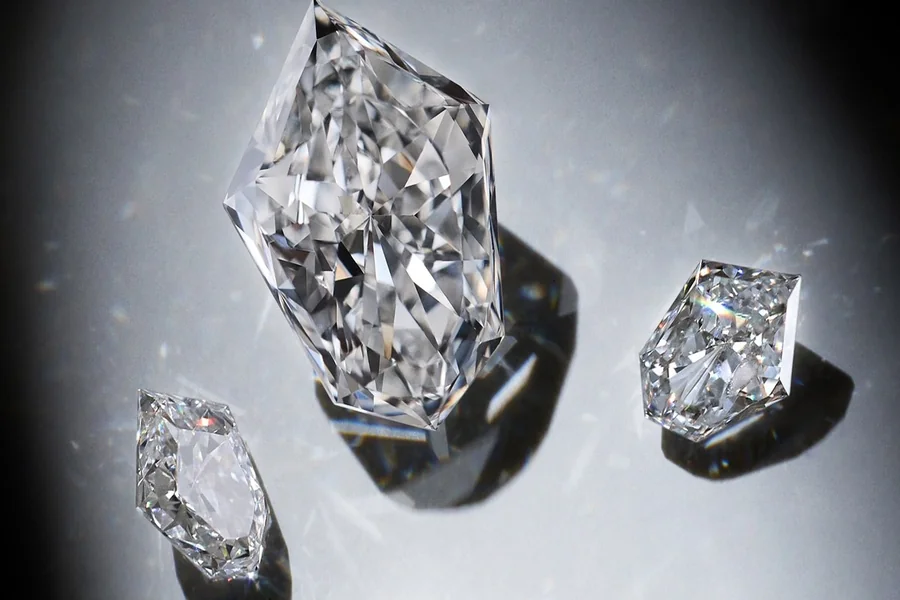
Sustainability isn’t just a buzzword anymore — it’s rewriting the rulebook across industries we thought we knew inside out. From how we power our homes to how we grow our food, the push for a cleaner, more responsible future has touched nearly everything. But diamonds? Those glittering symbols of forever? They seemed untouchable, locked in traditions going back centuries.
Not anymore.
The diamond industry is in the middle of a quiet revolution. Laboratory-grown alternatives are emerging that look, feel, and sparkle exactly like their mined counterparts — but with a fraction of the environmental damage. This isn’t about compromise or settling for less. It’s about building something better from the ground up, atom by atom.
The Hidden Cost of Traditional Mining
Here’s something most people don’t realize: mining a single carat moves about 250 tons of earth. That’s roughly the weight of a blue whale. And it doesn’t stop there. That one carat also generates 57 kilograms of carbon emissions and consumes thousands of gallons of freshwater. Across landscapes from the frozen expanses of Siberia to the red earth of southern Africa, mining operations have left scars that won’t heal in our lifetimes.
For decades, environmental responsibility wasn’t really part of the conversation in this world. The industry hummed along, largely shielded from the kind of scrutiny faced by oil companies or industrial agriculture. But as climate concerns moved from fringe to mainstream, scientists started asking uncomfortable questions. And the numbers they uncovered were hard to ignore.
Growing Diamonds in the Lab: Science That Sounds Like Science Fiction
So how do you grow a gem without digging up half a mountainside? Two main methods have emerged, and both sound like something out of a sci-fi novel — but they’re very real, and they’re happening right now.
The first is called Chemical Vapor Deposition, or CVD. Picture a chamber heated to over 800 degrees Celsius — hotter than molten lava. Inside, gases break apart and carbon atoms rain down onto a tiny seed crystal, building the structure layer by layer. It’s like constructing a miniature city, one atom at a time, with mathematical precision.
The second method, High Pressure High Temperature (HPHT), takes a different approach. It recreates the brutal conditions found 150 kilometers below Earth’s surface — pressures that could crush a car and temperatures that would vaporize most materials. Under these extremes, carbon transforms into crystalline form in a matter of days instead of billions of years.
What makes these processes remarkable from an ecological standpoint isn’t just that they work. It’s that they accomplish in a controlled laboratory space what nature requires entire continents and eons to achieve. The new generations of diamonds with a sustainable purpose coming out of these facilities are chemically identical to mined stones. But they’re born in a few weeks, not a few billion years.
The Numbers Tell the Story
Let’s talk metrics, because this is where the case for responsible production becomes undeniable.
A laboratory-grown gem generates about 6 kilograms of carbon emissions per carat. Compare that to the 57 kilograms from mining, and you’re looking at roughly 90 percent less impact. Energy consumption? Extracting a single carat from the ground demands about 538.5 million joules. Lab cultivation can accomplish the same result with 250 million joules or less — especially when powered by renewable sources.
And some facilities are pushing even further. There’s a production facility in the Pacific Northwest that runs entirely on hydroelectric power. It achieves carbon-neutral production, which would have seemed impossible just a decade ago. These aren’t projections or promises. They’re happening now.
The improvements aren’t incremental tweaks. They’re a complete rethinking of how we create these precious materials.
Beyond Jewelry: Crystals With a Purpose
Here’s where things get really interesting. Scientists aren’t just perfecting the art of growing gem-quality specimens. They’re engineering entirely new types with properties natural stones never possessed.
Researchers are creating structures with nitrogen-vacancy centers for quantum computing. Others are doping them with boron to make them electrically conductive for next-generation electronics. Ultra-pure laboratory specimens are finding their way into advanced optical systems and precision sensors.
What started as an effort to make environmental responsibility work in the jewelry industry is now opening doors to applications no one saw coming. For those seeking diamonds with a sustainable purpose, these lab-grown innovations open new possibilities beyond traditional jewelry. The plasma-enhanced CVD techniques being developed today could yield materials that outperform natural ones in specific industrial uses. Not bad for a technology driven initially by ecological concerns.
The Human Side of Ethical Production
But what if the gem on your finger could tell a story not just of luxury, but of responsibility?
Traditional mining has a dark history — one marked by labor exploitation, conflict financing, and supply chains so opaque you’d never know where a stone actually came from. The term “blood diamonds” exists for a reason.
Laboratory facilities flip that script entirely. They operate under strict workplace regulations. They offer complete traceability — you can know exactly when and where your piece was grown, by whom, and under what conditions. That kind of transparency simply doesn’t exist in traditional mining, where products pass through dozens of hands across multiple countries before reaching a retailer.
These production methods represent more than just environmental progress — they embody a fundamentally different relationship between luxury and ethics. For consumers seeking diamonds with a sustainable purpose, laboratory cultivation offers answers that mining operations simply cannot provide.
Younger consumers are paying attention. Surveys show over 70 percent of millennials say they’d choose a responsibly produced gem when given clear information about its origins. They’re not just buying a gemstone. They’re making a statement about the kind of world they want to live in.
What Comes Next
The future of eco-conscious production looks even more ambitious. Materials scientists are working toward carbon-negative facilities — operations that actually remove more carbon from the atmosphere than they emit. Artificial intelligence systems already optimize growth parameters in real-time, squeezing out inefficiencies and reducing waste.
Some researchers envision a distributed production model: small facilities scattered near renewable energy sources, growing crystals on demand rather than through centralized mega-factories. No massive mining operations. No shipping stones halfway around the world. Just local production powered by local renewable energy.
Industry analysts believe the cost gap between lab-grown and mined gems will keep shrinking. At some point — maybe sooner than we think — traditional extraction might not make economic sense anymore, even setting aside the environmental arguments.
A Choice That Sparkles
The transformation of this industry tells us something profound about innovation in the age of climate change. Environmental responsibility isn’t a restriction or a sacrifice. It’s a catalyst. It’s forcing us to imagine entirely new ways of doing things we thought were set in stone — literally, in this case.
Laboratory-grown gems prove that we don’t have to choose between beauty and responsibility, between luxury and ethics, between what we want and what the planet needs. In the same way, everyday consumer awareness can also extend to practical choices like checking cookout menu prices when comparing convenient food options and making more informed decisions.
These crystals don’t just sparkle. They reflect a choice, a story, and a commitment to a world we all share. The crystal lattices emerging from modern reactors might be atomically identical to those formed in Earth’s mantle over billions of years, but they represent something genuinely new. They’re proof that when we combine human ingenuity with a genuine commitment to ecological progress, we can create materials that serve our deepest desires without leaving destruction in their wake.
And that’s a different kind of forever.
Table of Contents