
Why Artificial Trees Suit Contemporary Interiors
Artificial trees have evolved far beyond the plastic-looking plants of the past, making them a practical choice for homes with a modern aesthetic. Contemporary interiors often emphasize clean lines, minimal color palettes, and carefully curated objects, and a well-chosen artificial tree can provide sculptural greenery without disrupting that balance. Unlike living plants, faux trees maintain a consistent appearance all year round, which helps when you want your décor to look the same from season to season. They are also ideal for rooms with limited natural light, where real plants may struggle to survive or require constant attention. In open-plan apartments and compact urban homes, artificial trees can bring a sense of nature without the mess of dropping leaves or soil. This reliability, combined with increasingly realistic textures and forms, makes them especially suited to busy professionals and design-conscious homeowners who value both style and low maintenance.
Using Artificial Trees As Architectural Features
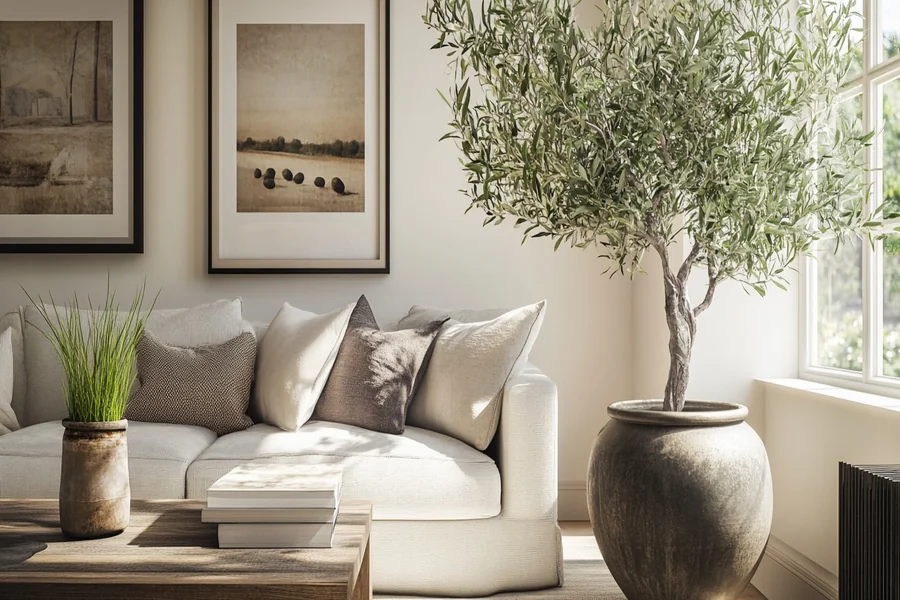
One of the most effective ways to use an artificial tree in modern decor is to treat it like an architectural element rather than just an accessory. Placing a tall, slim tree at the end of a hallway or in an unused corner can visually extend the space and soften sharp angles. In living rooms with large windows or glass doors, positioning a tree beside the frame creates a layered view, drawing the eye outward and blurring the boundary between indoors and outdoors. When coordinated with the height of furniture and lighting, these trees can anchor a seating area much like a floor lamp or a piece of sculpture. To keep the look contemporary, it often helps to choose species with simple, graphic silhouettes, such as olive trees, fiddle leaf figs, or bamboo, and avoid overly dense or fussy foliage. The result is a space that feels structured yet organic, with the tree acting as a quiet focal point rather than a decorative afterthought.
Styling Pots, Bases, And Groupings
The container and base of an artificial tree play a significant role in determining how modern or traditional it appears. For a contemporary look, many designers favor minimalist planters in materials like matte ceramic, concrete, or powder-coated metal. Neutral tones such as white, charcoal, and taupe blend well with most interiors, while black planters can add a graphic edge against lighter walls. Layering the base with stones, bark, or moss helps disguise any visible plastic and gives a more authentic impression. Grouping a taller tree with a couple of smaller faux plants can create a curated “green zone” in an otherwise streamlined room. This approach works particularly well in open-plan spaces where you might want a subtle visual break between a dining area and a lounge area. When grouping, varying the heights and textures of both plants and containers keeps the arrangement from looking too uniform or staged.
- Use matching planters in different sizes to create a cohesive, contemporary look.
- Choose one dominant tree and support it with smaller plants to avoid visual clutter.
Zoning, Privacy, And Functional Uses
Beyond their visual appeal, artificial trees can serve practical functions in modern homes, especially where open layouts are common. Tall, narrow trees can act as gentle room dividers without blocking light or making an area feel closed in. Placing a row of similar trees along the edge of a workspace or reading nook can define the zone while keeping the overall floor plan flexible. In apartments with large windows that face neighboring buildings, a carefully positioned artificial tree can provide a degree of privacy without the need for heavy curtains or blinds. Many people also use faux trees to soften the edges of functional items like media units, shelving systems, or home office desks. By placing a tree beside these pieces, the room feels less dominated by screens and storage, and more balanced between technology and nature. This functional layering makes artificial trees a versatile tool for homeowners who want their spaces to feel both efficient and welcoming. For those looking for inspiration, a wide selection of artificial trees are available to suit different design needs and preferences.
- Use a single tree near a desk to visually separate work from relaxation areas.
- Line up two or three slim trees to create a semi-transparent divider in open-plan rooms.
Table of Contents