
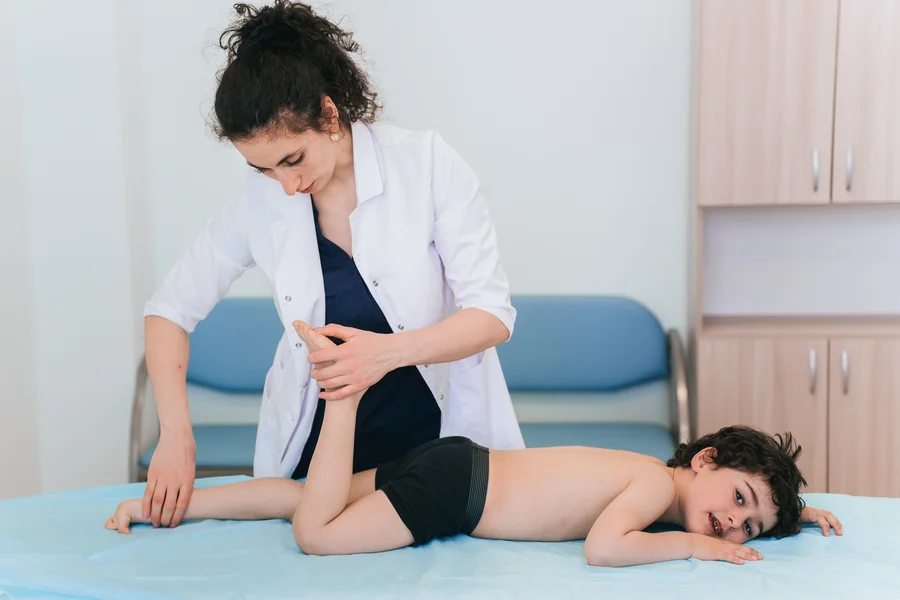
Bones, muscles, and joints remain in the developing phase in children. As these parts aren’t fully developed and exhibit the strength one can see in adults, pediatric orthopedic conditions differ significantly. Handling these health situations will require clinical specialization, which only a pediatric orthopedic in Bangalore can put forth on the table.
These professionals are expert in identifying and diagnosing problems related to the Musculo-skeletal system in children of varied age groups. With timely treatment, not only can they ensure proper growth but also prevent long-term complications.
That being said, let’s have a quick look at some of the common pediatric conditions and their treatment options.
Clubfoot (Congenital Talipes Equinovarus)
Usually present from the time of birth, this condition is categorized by one or two feet being turned inwards or downwards. It’s a quite common occurrence, having a frequency of one affected case in every 1000 live births. Proper treatment is of utmost importance. Otherwise, the chances of the child facing disability issues increases and they can suffer from long-term walking difficulties.
Treatment options
- Ponseti Method: It is a non-surgical treatment approach where serial casting and gentle manipulation are done over a period of weeks. Following this, the orthopedic specialist will perform a minor procedure to lengthen the Achilles tendon.
- Surgery: In resistive or severe cases, orthopedic surgeons often recommend a corrective surgery to adjust the ligaments, tendons, and joints.
- Bracing: After correction, the child will be given a foot abduction brace to ensure there’s no further dislocation or misalignment.
Developmental Dysplasia of the Hip (DDH)
DDH is one of the most common conditions an orthopedic doctor in Bangalore is trained to diagnose and treat. It is characterized by an improper development of the hip bone and the surrounding joints, thereby leading to partial dislocation, instability, or complete dislocation. Family history or breech births are considered the most common reasons.
Treatment options
- For infants under six months of age suffering from DDH, leveraging the Pavlik harness will keep the hip in appropriate position, allowing the joints to develop as expected.
- If the condition is diagnosed later on, repositioning needs to be done under general anesthesia.
- Older children often require an intensive reconstructive surgery and casting to stabilize the hip bone and the connecting joints.
Scoliosis
Often detected during adolescence, this is characterized by an abnormally looking sideway curvature of the spine. Ranging from mild to severe, it can lead to excruciating back pain, uneven shoulder, or breathing issues in advanced cases. That’s why you need to visit a surgeon specializing in pediatric orthopedics in Bangalore.
Treatment options
- For mild curvature abnormalities, regular monitoring helps manage the condition and prevent any further structural deformities.
- In growing children with moderate spinal curvatures, using braces can prevent the medical condition from worsening any further.
- Sometimes, the Musculo-skeletal problem escalates to an extent where a surgical spinal fusion may be the only treatment option left. Here, the spines are fused together using rods and screws to correct the vertebral alignment.
Flatfoot (Pes Planus)
Known as one of the most common issues in pediatric orthopedics in Bangalore, flatfoot occurs when the foot arch suddenly collapses or fails to develop properly with the necessary curvature. While in most cases, the condition automatically corrects itself with age, some could persist and cause unnecessary pain.
Treatment options
- Using custom shoe inserts can help relieve the difficulties and pain associated with the flat feet arch in children.
- Strengthening and stretching exercises also contribute a lot in improving the foot mechanics.
- Although rarely needed, symptomatic or severe cases can be treated only with a surgical correction followed by a prolonged use of braces to support the newly formed arch.
Leg length discrepancy
Sometimes, kids are born with legs having different lengths or develop this discrepancy due to infection, trauma, or congenital conditions. Although minor differences can go unnoticed, the significant ones can cause gait problems or immense pain in the back and hip.
Treatment options
- For smaller differences in the legs’ lengths, modifying the shoe’s height can create the balance required for walking or sprinting.
- Sometimes, the orthopedic doctor in Bangalore can also suggest for growth modulation. It is a treatment path where the growth in the longer leg is slowed down temporarily to allow the shorter limb to catch up.
- For discrepancies with noticeable differences in the lengths of the lower extremities, advanced surgical techniques can lengthen the shorter limb gradually via internal or external devices.
Osgood-Schlatter disease
Last on this list is the Osgood-Schlatter disease, an active knee condition in adolescents and active kids, usually caused by the patellar tendon being exposed to excessive stress, especially at its connection with the shinbone. Symptoms usually includes swelling and pain right below the knee. You can learn more about similar health topics on kaiyo.
Treatment options
- Anti-inflammatory medicine and ice application to manage and reduce the swelling and pain.
- In some cases, using knee straps can help reduce stress on the tendon.
Summing up:
Most conditions associated with pediatric orthopedic in Bangalore vary in terms of severity, ranging from self-healing flatfoot to complex disorders like hip dysplasia or scoliosis. Surgeons and doctors emphasize growth monitoring, early detection, and dependency on minimally invasive procedures wherever and whenever possible.
Table of Contents